
If your child needs stronger glasses at each visit, you may wonder if their prescription is changing faster than it should. Myopia management can help families understand what is driving those changes and whether a plan to slow progression may be appropriate.
Children’s eyes grow and change, especially during their school-age years. A stronger prescription does not always mean there is a serious problem, but frequent increases in nearsightedness deserve attention. Myopia can continue progressing as a child grows, which is why tracking changes early matters.
What does a quickly changing prescription look like?
Myopia makes distant objects look blurry while close-up tasks may still feel clear. Your child may not realize their vision has changed, but you may notice them adapting in small ways.
Watch for signs such as:
- Squinting at the board, signs, or TV
- Moving closer to screens or holding books very near
- Complaining of headaches or tired eyes
- Asking to sit near the front of the classroom
- Losing focus during distance-based activities
- Avoiding sports or activities that require clear distance vision
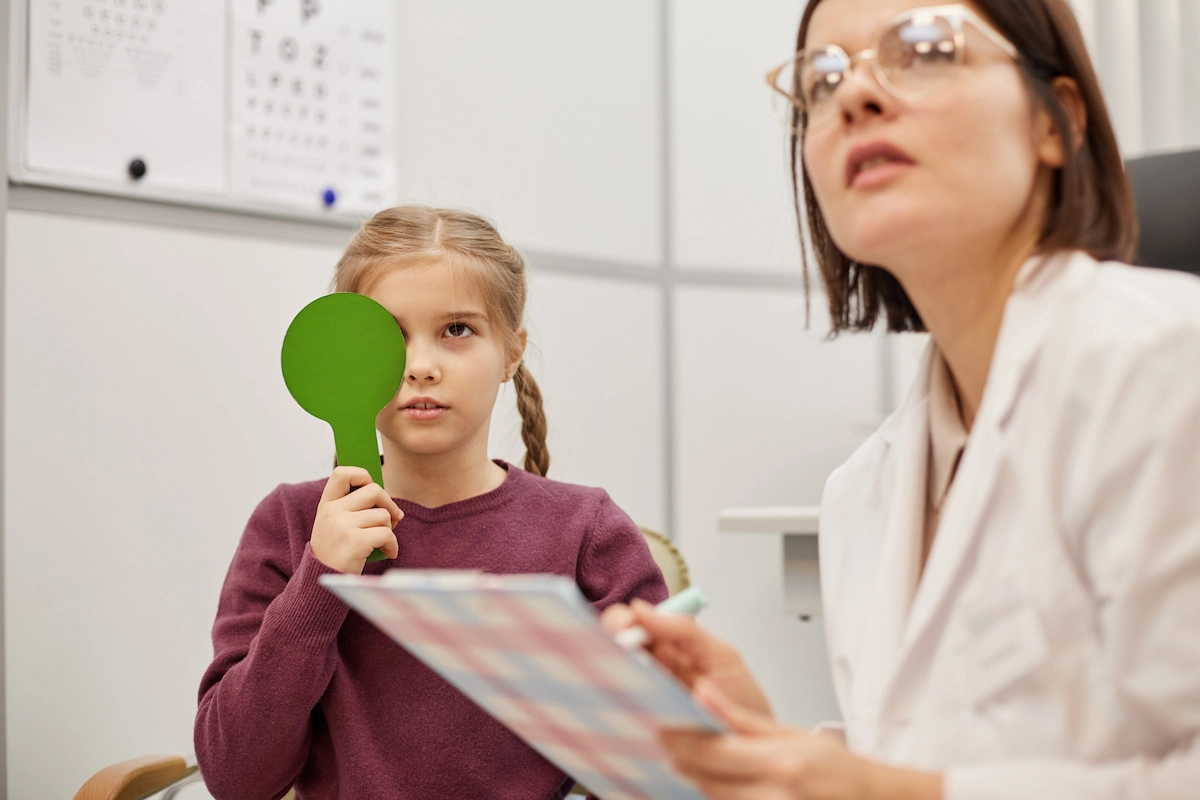
A pediatric eye exam checks more than whether your child can read an eye chart. It also evaluates eye health, visual development, and how well the eyes work together.
Why does myopia progression matter?
Myopia is more than a need for stronger glasses. As a child becomes more nearsighted, the eye may continue growing longer. Higher levels of myopia are associated with a greater risk of certain eye health concerns later in life.
That is why managing myopia is not only about helping your child see the board clearly today. It is also about monitoring prescription changes and supporting long-term eye health as they grow.
Your child’s age, prescription history, rate of change, eye health, and daily routine can all help determine the most appropriate care plan.
What can help slow prescription changes?
After a comprehensive exam, your eye doctor can recommend options based on your child’s needs and comfort level. A personalized plan may include:
- Prescription glasses for everyday distance vision
- Myopia-management contact lenses for eligible children
- Regular follow-up visits to track eye growth and prescription changes
- More outdoor time and regular breaks from sustained close-up work
- Stellest® lenses for children who need a glasses-based myopia management option
Stellest lenses correct distance vision while using technology designed to help slow myopia progression. They can be a practical choice for families who prefer a glasses-first solution that fits into school, sports, and daily routines.
Could another vision issue be involved?
A changing prescription is not the only reason a child may struggle at school. Eye teaming, tracking, focusing, or visual-processing challenges can also contribute to headaches, eye fatigue, and difficulty sustaining attention while reading.
If those concerns are present, vision therapy may help build visual skills that glasses alone cannot address.
When an updated prescription is needed, properly fitted eyeglasses with durable, comfortable lens options can help your child see clearly through school and play.
Give your child’s vision a plan
You do not have to wait until your child is struggling to see the board or asks for stronger glasses again. Schedule a pediatric eye exam if you have noticed squinting, blurry distance vision, headaches, or frequent prescription changes.