
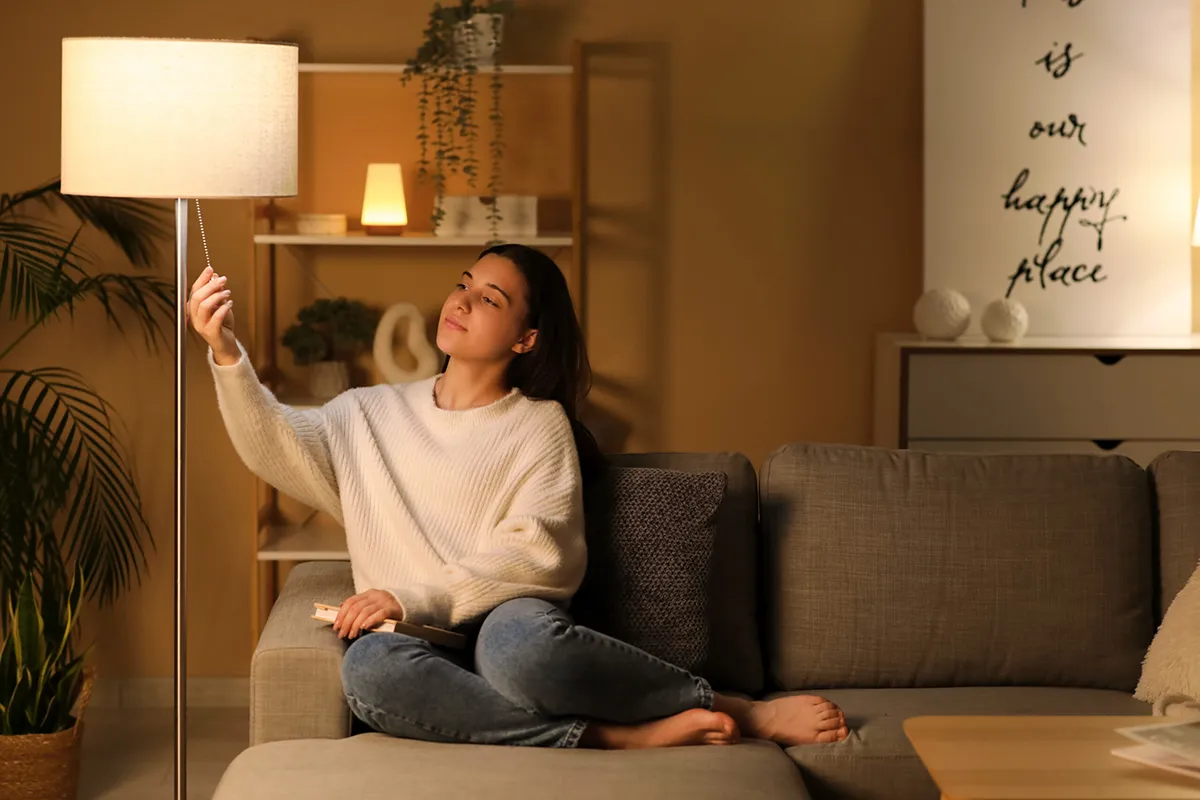
If you’ve ever found yourself squinting to read a menu, struggling to see clearly in a dimly lit room, or dealing with headaches after a long evening on the couch, lighting might be the overlooked culprit. During a comprehensive eye exam, your eye doctor can help identify whether your symptoms are vision-related, but sometimes, the fix starts right at home. The lighting in your home has a bigger impact on how comfortably you see than you might think, and even small adjustments can help ease eye strain.
Why lighting matters more than you think
Your eyes are constantly adapting to the light around them. When lighting is too dim, too harsh, or poorly positioned, your eyes overcompensate, leading to eye strain, fatigue, and even blurred vision. This isn’t just a nuisance. Over time, consistently poor lighting conditions can worsen existing vision problems and reduce your overall quality of life at home.
Some signs that your lighting might be working against you:
- Frequent headaches after reading or screen time
- Needing to tilt your head or move closer to see clearly
- Tired, dry, or burning eyes in the evening
- Difficulty distinguishing colors or fine details
Room-by-room lighting tips you can use today
Different spaces in your home call for different lighting strategies. Here’s where to start:
In the kitchen:
- Use bright, cool-toned lighting (around 4000–5000K) for food prep areas
- Add under-cabinet lights to eliminate shadows on countertops
- Avoid relying solely on a single overhead fixture
In the living room:
- Layer your lighting — combine overhead, floor, and table lamps
- Use warm light (2700–3000K) for relaxed reading or TV watching
- Place lamps so light falls over your shoulder, not in front of your eyes
In the bedroom:
- Opt for adjustable bedside lamps so you can control brightness while reading
- Avoid bright overhead lights right before sleep, which can strain your eyes and disrupt rest
At your desk or workspace:
- Position your monitor so that windows are to the side, not directly behind or in front of it
- Use task lighting aimed at your work surface, not your screen
- Match your screen brightness to the brightness of the room around it
How aging eyes need different light
As we age, our eyes naturally require more light to see clearly. The lens inside the eye becomes less flexible and may yellow slightly, reducing contrast sensitivity. If you’re over 40, you may notice that what felt like “enough” light a decade ago suddenly feels insufficient.
An optometrist can provide personalized guidance on how your specific vision needs should inform the way you light your home. It’s not one-size-fits-all; someone managing early cataracts will have different needs than someone dealing with dry eye or light sensitivity.
Natural light is your best friend (with a few caveats)
Daylight is the most flattering light for your eyes, but direct sunlight can create harsh glare. Use sheer curtains to diffuse sunlight rather than blocking it entirely. Sitting near a window during daytime tasks can reduce dependence on artificial light and feel easier on your eyes overall.
Better lighting means a better quality of life
Adjusting your home’s lighting is one of the most accessible ways to support your vision and feel more comfortable day to day. Pair these changes with regular visits to your optometrist, and you’ll have a fuller picture of what your eyes need to thrive.
Struggling to see comfortably at home? Book an appointment with Family Eyecare of Orange and learn how lighting adjustments may help.